

Why New Construction Foremen Struggle and How to Set Them Up for Success
Summary: If you have a first-time construction foreman that is struggling, the root issue is likely a quick promotion process with inadequate preparation. Research shows most foremen are elevated unexpectedly based on craft expertise, rather than leadership readiness, and are given minimal training in their new responsibilities. To improve results, consider adopting a more strategic foreman development program, where top candidates are identified, trained, onboarded and supported. NCCER’s Construction Foreman Certification Program is a leading resource for first-time foreman training, helping contractors quickly and conveniently get started.
Why Do New Construction Foremen Struggle?
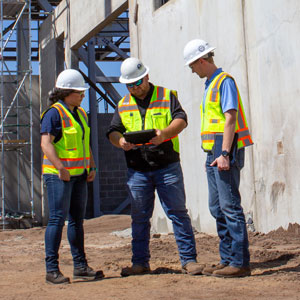 From schedule delays and crew management challenges to high rates of rework, it’s common for new construction foremen to struggle in adapting to their new role.
Leading a crew carries a lot of responsibilities. Young or inexperienced foremen often deal with situations they have never faced before. Their ability to succeed is influenced by how prepared they are before those situations arise.
To understand why your foremen are not performing to expectations, it’s helpful to look at the circumstances of their promotion:
- Timing: How much advance notice they had before being promoted
- Preparation: How much pre-promotion professional development they were given
- Onboarding: How much post-promotion training and support they had
How Are Most Construction Foremen Promoted?
Most foremen are promoted based on good performance as a craft worker. A reliable employee who shows up on time and does good work is usually on the short list when a foreman vacancy comes open.
Because these vacancies can often happen on very short notice, a top candidate may get promoted to the role very quickly. It’s not uncommon for someone to clock out one day as a craft worker and clock in the next day as a first-time supervisor, with little more than a single conversation in between.
What are the Challenges of Transitioning from Craft Professional to Foreman?
 Being a craft professional is very different than being a field leader. Hands-on technical skills only cover a small portion of a foreman’s job.
Key responsibilities of a construction foreman include:
- Scheduling and coordination
- Resource management
- Communication with crews, superintendents and project managers
- Overseeing safety and compliance
- Quality control
- Maintaining crew morale
- And much more
In most cases, a craft professional with no previous leadership experience has never been in charge of these things.
While some people are natural-born leaders and can embrace these new responsibilities more easily, it doesn’t come as intuitively to others. Things like crew conflicts or unexpected project changes aren’t casual situations that anyone can handle without training.
Most Foremen Lack Proper Onboarding and Training
In a 2018 study, the Construction Industry Institute (CII) found that frontline supervisors generally receive inadequate training for their roles.
According to the report, most novice foremen receive “minimal onboarding support” and are often left to figure out things on their own. For those who are provided training, it is often limited to general supervision guidance and safety topics.
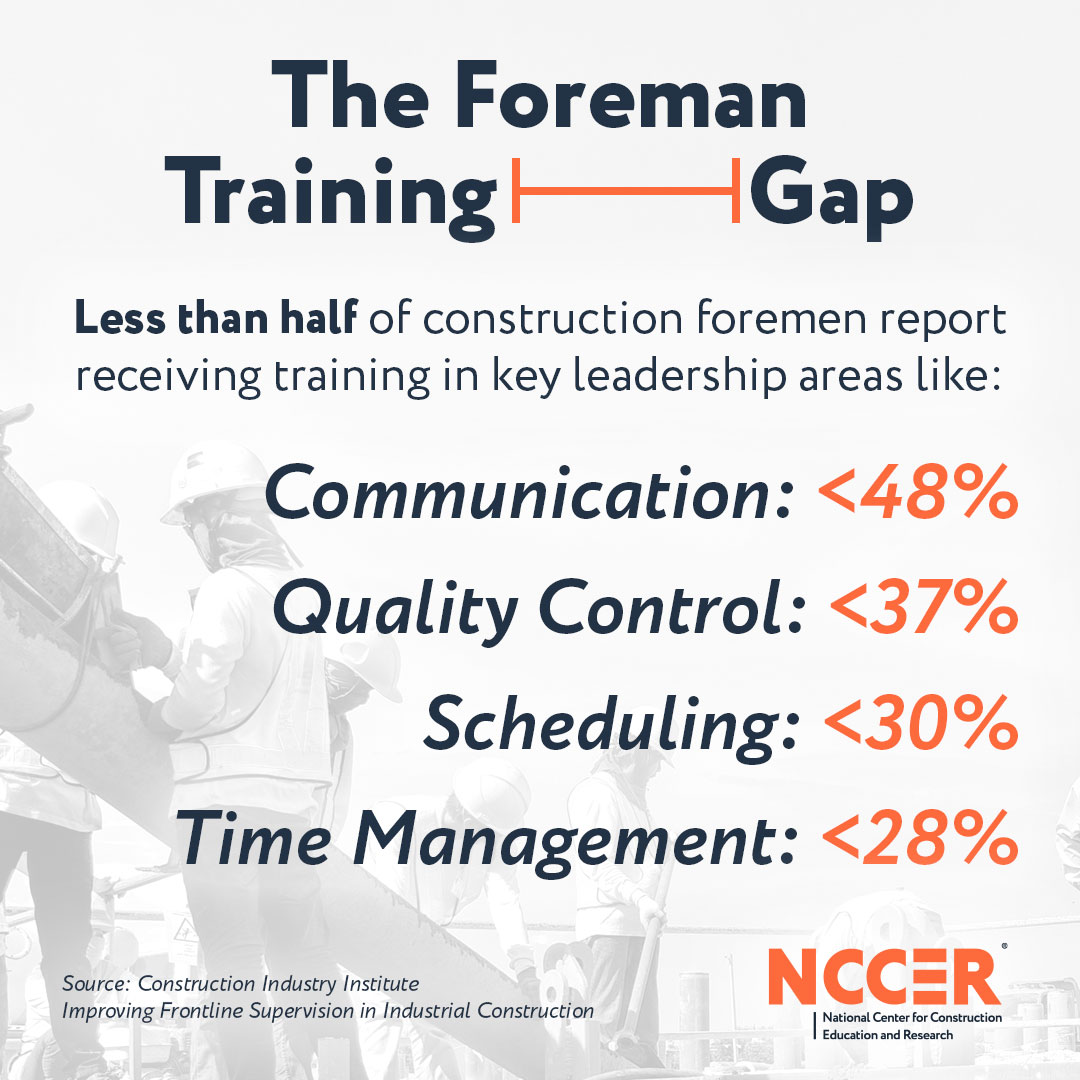
In fact, less than half of all construction foremen report receiving training in key leadership areas:
- Effective Communication: Less than 48%
- Quality Control: Less than 37%
- Scheduling: Less than 30%
- Time Management: Less than 28%
Because of these training gaps, the majority of new foremen are underprepared to effectively manage many of the unique demands of their position.
As noted in the CII report, “most foremen are never given their best opportunity to do well and, consequently, the performance of craft labor on many projects is much less than optimal.”
How to Improve First-Time Foreman Performance
To help first-time foremen more easily adjust to their new role and perform better faster, you can establish a more strategic foreman promotion process.
1. Identify Future Foremen
- Identify high-potential craft workers who may make good future foremen. Discuss the opportunity and responsibilities of the role with these candidates and gauge their interest in joining a leadership pathway.
- The Reason: This clarifies your leadership pipeline, filters out bad fits and removes the surprise factor from quick promotions.
2. Begin Developing Leadership Skills Early
- Provide developmental leadership training to top candidates before a promotion opportunity arises. Focus on universally beneficial skills like communication, emotional intelligence and critical thinking that can be applied immediately.
- The Reason: This prepares foundational leadership ability that aspiring foremen can practice in a lower-risk environment.
3. Give Advance Notice When Possible
- Try to provide as much advance notice as possible when a promotion is imminent.
- The Reason: This will allow the employee to better mentally prepare for the jump from craft professional to foreman.
4. Provide Onboarding Training
- Help onboard newly promoted foremen with structured training. This should cover general areas of responsibility, as well as more specific tasks, procedures and project requirements.
- The Reason: This prevents a “trial by fire” and gives new foremen clear expectations and a better understanding of the nuances of their new job.
5. Offer Ongoing Support
- Continue to support your foreman through weekly check-ins, coaching or mentorship opportunities and additional training.
- The Reason: This helps you nurture your new leader’s progress and address any pain points as soon as possible.
What Tools Help Contractors Provide Foreman Training?
While training foremen is crucial, many contractors don’t have the resources or expertise to build up a formal development program from scratch. Creating a curriculum, finding instructors and other administrative challenges are common obstacles.
That’s why some contractors turn to established workforce development resources like NCCER.
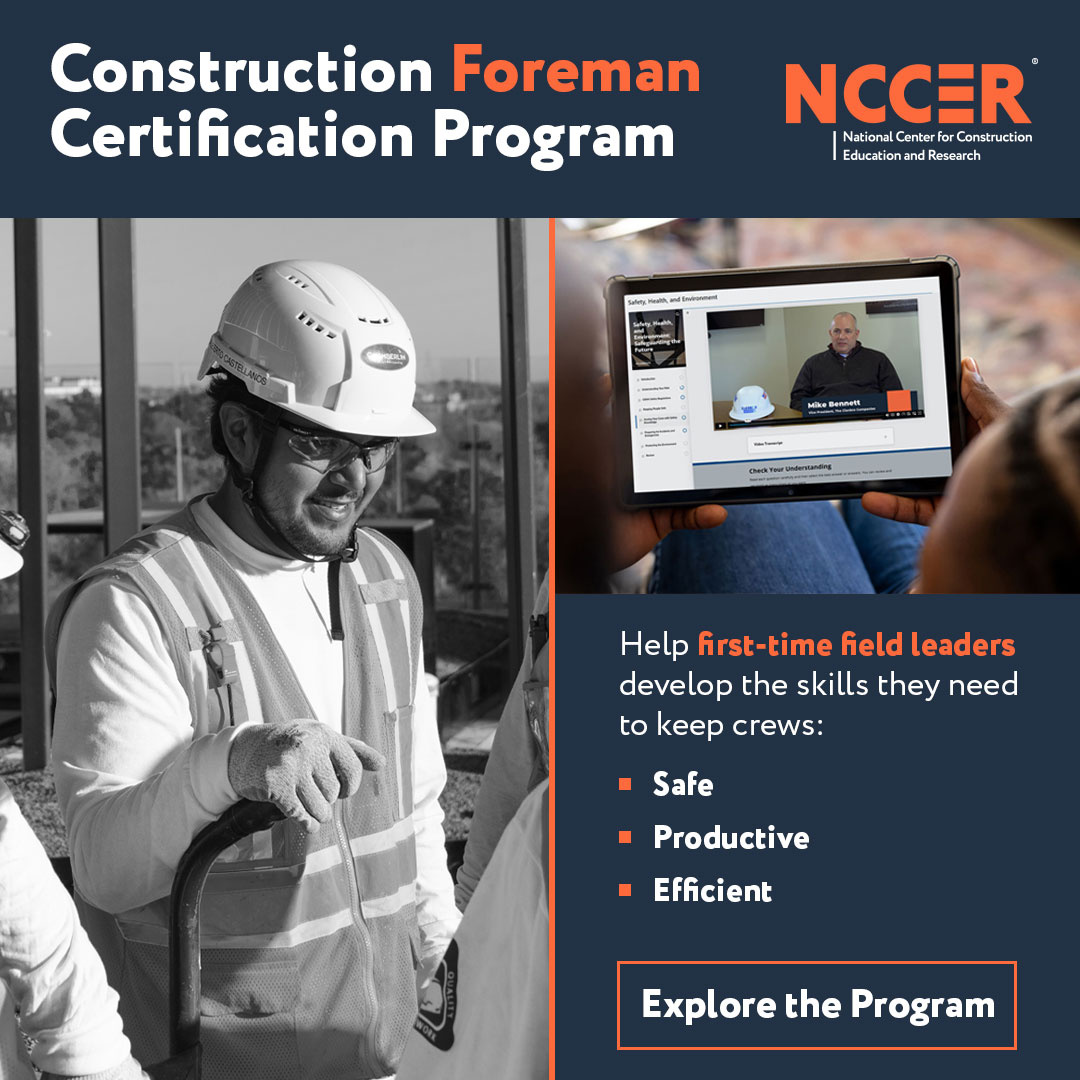 NCCER’s Construction Foreman Certification Program gives contractors a ready-to-use option for training new and aspiring foremen, with coursework developed in collaboration with more than 50 industry subject matter experts.
The program covers five key areas of frontline supervision:
- Leadership and Supervision
- Communication
- Productivity
- Quality
- Safety, Health and Environment
Contractors can assign the courses as online, self-paced training or incorporate them into an in-house development program. Participants also have the opportunity to earn formal NCCER Foreman Certification after successful completion of the assessment.
Click here to learn more about the program.
Set Your New Foremen Up For Success
Foremen are key to a construction project’s success, but they can naturally struggle when they are promoted suddenly and without proper training.
With structured foreman development, you can build a pipeline of future leaders who are prepared and ready to step into supervisory roles. When equipped with the right tools to succeed, your new foremen can quickly become top performers and lead productive crews.
To learn more about building a foreman training program, check out our free webinar: Developing Effective Foremen – Lessons from the Field.
FAQs
Why Are My New Construction Foremen Struggling?
The most likely cause is inadequate preparation for leadership responsibilities due to an accelerated promotion. Research shows that more than half of foremen lack training in communication, quality control, scheduling and time management.
What Training Should I Give to New Foremen?
Because being a supervisor is a very different job than being a trades professional, an effective foreman training program should cover a wide range of leadership topics. This includes leadership-centric soft skills (communication, conflict resolution, decision-making, etc.), key areas of responsibility for foremen (scheduling, resource management, quality control, etc.), and specific project- or company-based procedures and processes.
How Can I Start a Foreman Training Program?
To begin providing high-quality foreman training quickly, it’s recommended for contractors to leverage materials from respected construction education organizations like NCCER. Their Construction Foreman Certification Program is a preferred way to implement structured leadership development for both new and aspiring foremen due to the relevant content and ease of use.